OUR HISTORY
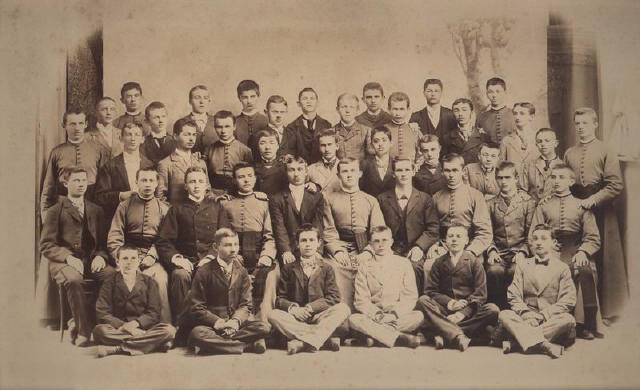
A seminary was established in the Diocese of Pécs half a century after the end of the Turkish occupation. Construction of the seminary began on 4 June 1742 with Bishop Zsigmond Berényi laying the foundation stone. The institution was consecrated on 4th September 1746 and dedicated to Saint Paul the Apostle.
Some 3,000 volumes belonging to Bishop Berényi and the cathedral chapter came to form the basis of Hungary’s first public library, which opened its doors in Pécs in 1774. The library was founded by Bishop György Klimó a seminal cultural figure of his age. The seminary was a matter of great importance to Bishop Klimó, causing him to increase the number of students, endow new departments, and establish a course in philosophy. Bishop Klimó also raised the number of years devoted to study from two to four.
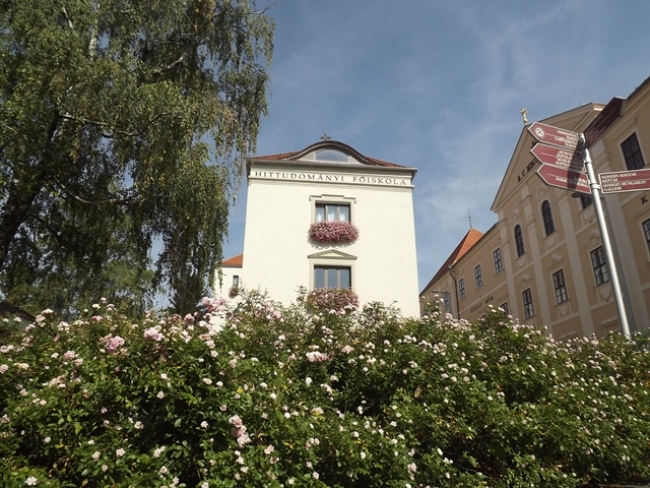
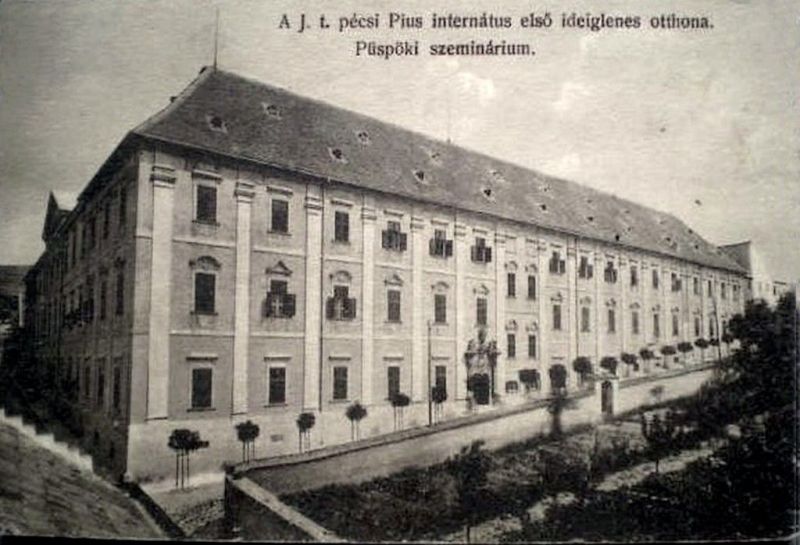
photo: regipecs.blog.hu
After Klimó’s death, Habsburg Church policy under Emperor Joseph II sought to unify priestly education. Thus, in 1779, a seminary was established in Buda and another in 1787 in Bratislava. The students of the seminary of Pécs were educated in Bratislava from 1785 to 1790. In 1790 a royal decree abolishing the central seminaries was issued. In Pécs, the first rector of the seminary, Canon Paffán, carried out a major construction project, significantly expanding the building. Former teachers who had been serving in their parishes in the meantime returned to their departments.
In 1791, Bishop Eszterházy, a former Pauline monk, drew up new statutes and appointed Ferenc Szányi, later Bishop of Rožňava, to the position of prodirector.
In 1828 Ignác Szepesy was appointed bishop. With an endowment of 100,000 forints, he established a lyceum comprising faculties of law and philosophy. The building, constructed in Pécs in 1835, is deemed one of the most beautiful neoclassical buildings in the city.
In an effort to expand the episcopal library, Klimó donated four thousand volumes to the collection. He also relocated the theology lectures to the library, where they continued until 1883. The War of Independence took place during the episcopate of his successor, János Scitovszky, leading to the displacement of most of the priests. When Scitovszky was elected Primate, György Girk succeeded him as bishop. In 1860, Bishop Girk advanced the cause of priestly education in Pécs by founding a minor seminary. He opened the Marianum, a student home for junior priests in secondary school.
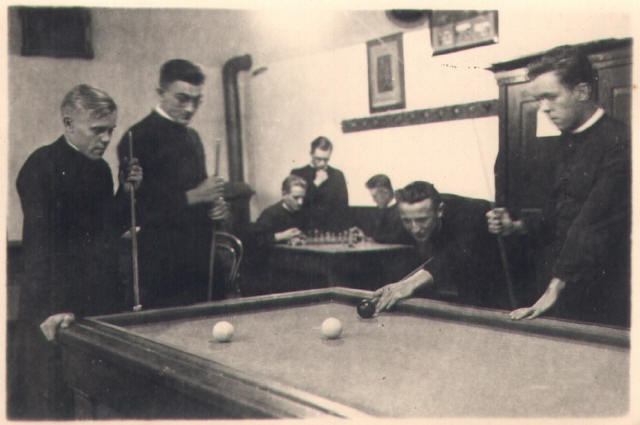
In 1883, Bishop Nándor Dulánszky who oversaw the restoration of the Cathedral in the years 1882-91 and founded the Cathedral Schola and attached schools, expanded the large western wing of the seminary building. The additions to the building came to house the minor seminary. During the renovation of the Cathedral, the four-meter statues of the Apostles that had been carved by Mihály Bartalits in 1854 were moved from the cathedral’s pediment to the courtyard. Bishop Dulánszky also had the banqueting hall and the smoking room built in 1893, thereby enclosing the courtyard from the northern side.
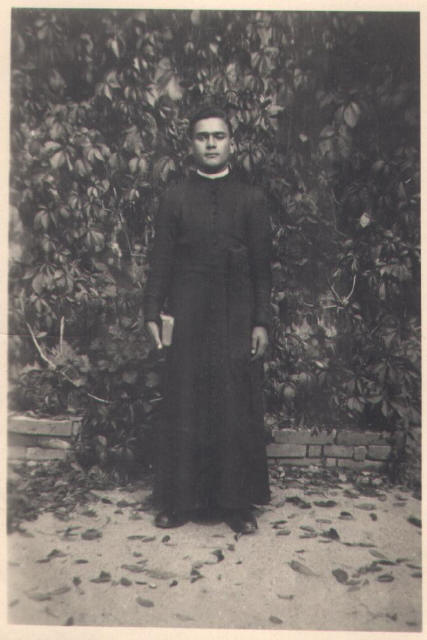
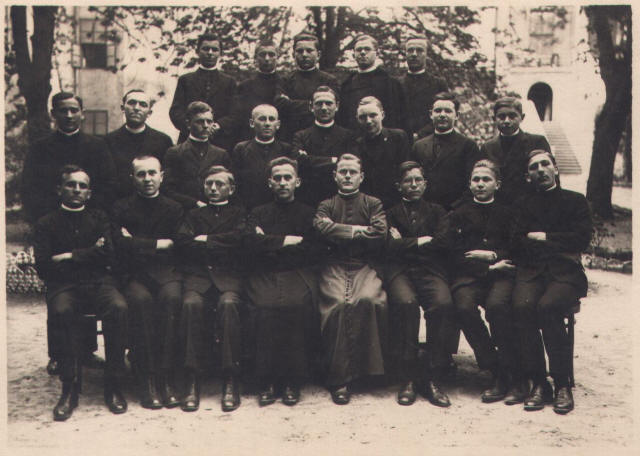
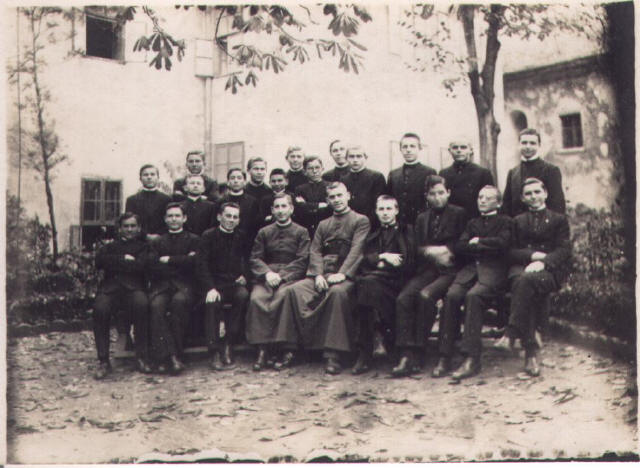
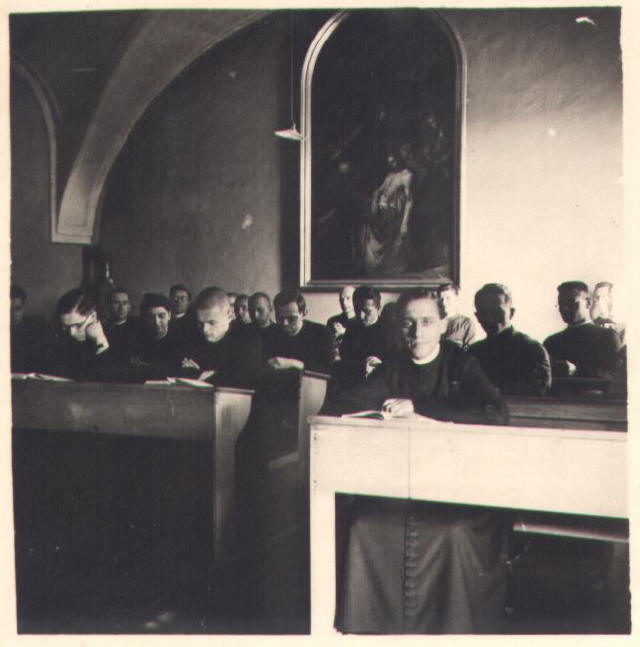
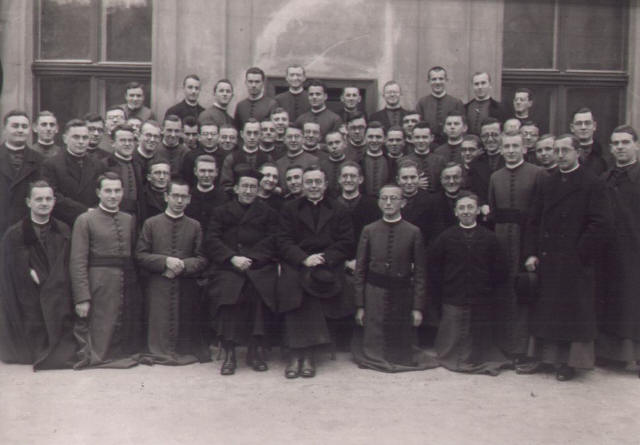
The events of the First and Second World Wars also brought changes in the life of the seminary. The building was first turned into a shelter and then a military hospital for the inhabitants of the area.
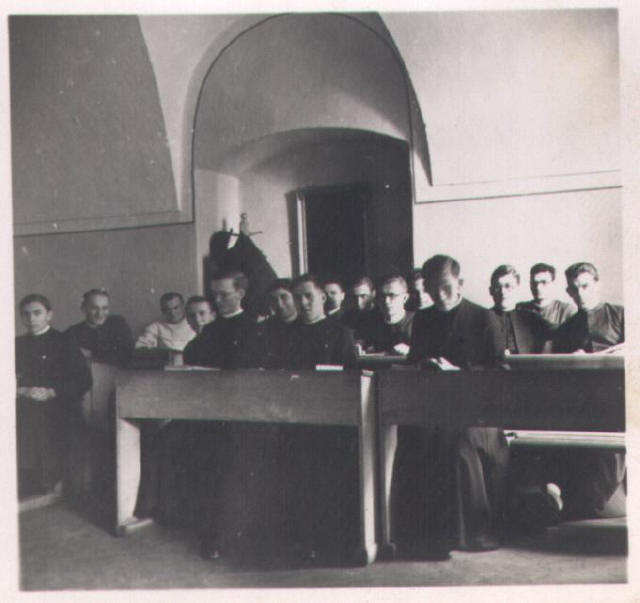
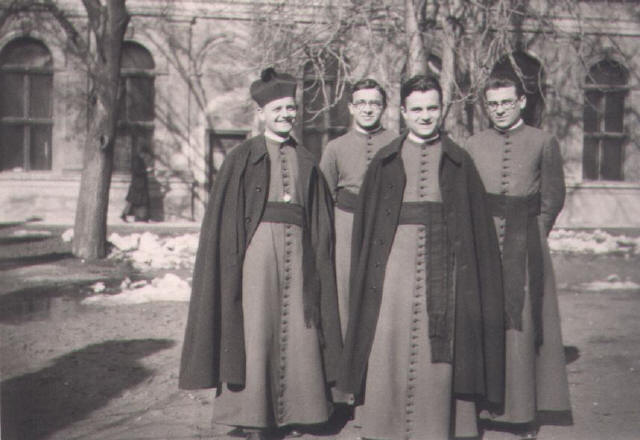
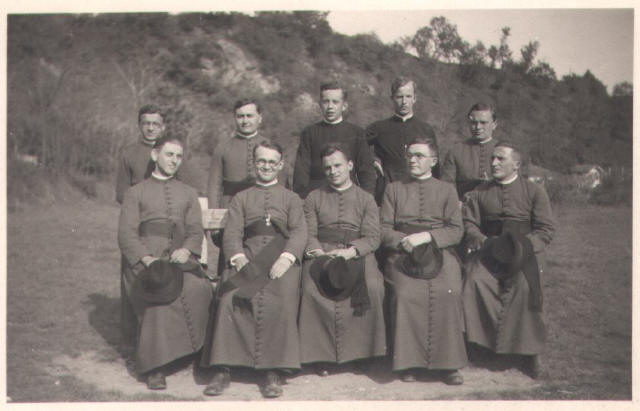
In March 1945, the Russian military command authorised teaching activities to resume. By 1950, seminarians were once again living and studying in the diocese. In August 1951 the seminary building was confiscated by the state for the purposes of housing a secular school.
After the regime change in 1991, Bishop Mihály Mayer re-established the college, expanding the education system beyond the training of future priests to include the education of religion teachers and lay theologians. Bishop Mayer appointed Endre Bán as the first rector of the institution, and he remained at the head of the college until his death in 1995.
In the first academic year, the seminarians returning from Győr and the new recruits were still living in the diocese. Classes were held in the parish halls of the cathedral at 8 Káptalan Street and in parish hall of the cathedral. The original building of the seminary (please see the introductory picture) continued to be used by the secular authorities for years, so the temporary location of the seminary and the college from the next academic year onward became the former priest’s home at 11 Hunyadi Street. The same building had housed the editorial board of the Dunántúli Napló during the years of socialism.
After the death of Endre Bán, István Horváth became the rector of the institution until 2000.
Under his rectorship, the restoration of the imposing original seminary building was completed. However, only the college moved to its western wing, while the seminary was housed in the building of the former Carmelite monastery where seminarians of the diocese continue to be prepared for ordination until the suspension of the seminary in 2007.
Dr. Zsolt Cziglányi became rector of the college in 2001.
In 2014, Bishop Dr. György Udvardy set up a large endowment for the renovation and modernization of the college building that had been in use in the 1990s. The college occupied this modernized, comfortable building in November 2014, while its library remained in the northern building of the former seminary.
Prof. Dr. Gusztáv Kovács has served as the rector of the College from 2017 to 2025.
In 2025, Dr. Ottilia Lukács assumed the role of the College’s inaugural lay woman rector.